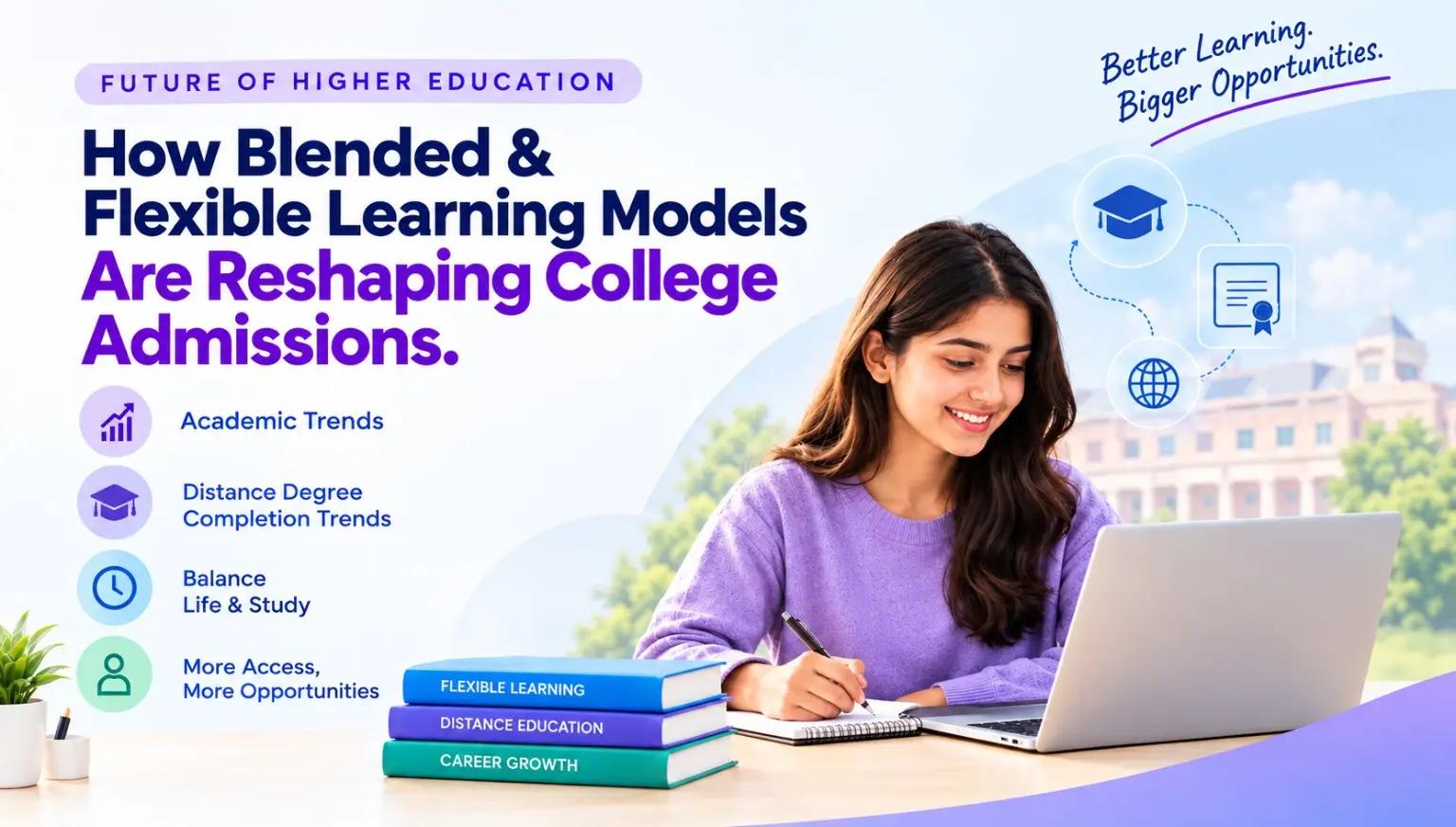
The traditional college experience is changing rapidly. For decades, higher education followed a familiar model: students applied to a university, attended classes on campus, followed a fixed academic calendar, and completed their degrees within a predetermined timeframe. Today, however, blended and flexible learning models are creating a more adaptable approach to higher education.
From online lectures and virtual classrooms to weekend programs and distance degree completion, colleges are increasingly offering learning options that fit around students’ lives rather than requiring students to completely reorganize their lives around college.
The Rise of Flexible Higher Education
The growth of digital education has made flexibility a major consideration for students choosing an institution. Working professionals, parents, entrepreneurs, and students living far from campuses may not be able to commit to a traditional full-time, on-campus program.
Blended learning addresses this challenge by combining online education with selected in-person academic experiences. Students may attend some classes physically while completing lectures, assignments, discussions, and assessments online.
Flexible learning takes this idea even further. Programs may offer multiple scheduling options, digital course materials, recorded lectures, remote assessments, or alternative pathways for completing degree requirements.
As a result, the definition of a “college student” is becoming much broader.
Admissions Are Becoming More Student-Centric
Flexible education is also influencing the college admissions process. Traditionally, admissions were closely connected to a student’s ability to relocate, attend classes at specific times, and commit to a conventional academic schedule.
Today, prospective students are increasingly asking different questions:
- Can I study while working?
- Can I complete part of my degree online?
- Are lectures available remotely?
- Can I transfer previous academic credits?
- Can I complete my remaining courses without relocating?
- How quickly can I finish my degree?
These questions are encouraging institutions to make admissions information more transparent and accessible. Instead of focusing exclusively on campus-based enrollment, colleges are developing pathways designed for different student circumstances.
Distance Degree Completion Is Gaining Momentum
One of the most important academic trends is the growing interest in distance degree completion. Students who have already completed some college-level coursework but did not finish their degree can benefit significantly from flexible programs.
Life circumstances such as employment, family responsibilities, financial pressures, or relocation can interrupt a student’s education. Flexible degree-completion programs provide an opportunity to return to higher education without necessarily starting over.
For institutions, these programs can also expand access to learners who might otherwise be unable to enroll in a conventional program.
Technology Is Transforming the Student Experience
Technology is at the center of this transformation. Learning management systems, video conferencing, digital libraries, mobile learning applications, and online collaboration tools allow students to participate in academic activities from different locations.
Artificial intelligence and other emerging technologies are also beginning to influence how students receive academic support, discover learning resources, and manage coursework.
However, technology alone does not create a successful flexible learning experience. Institutions must also provide strong academic advising, reliable technical support, engaging course design, and meaningful interaction between students and faculty.
What This Means for Colleges
For colleges and universities, flexible education is no longer simply an alternative delivery method. It can become an important part of their overall admissions and enrollment strategy.
Institutions that offer multiple learning pathways can appeal to a wider range of students. They can serve traditional college-age learners while also supporting working professionals and adult learners seeking to complete unfinished degrees.
The future may therefore be less about choosing between “online” and “on-campus” education and more about creating seamless learning ecosystems that combine both.
Looking Ahead
The future of higher education is likely to be more personalized, accessible, and flexible. Students increasingly expect education to accommodate their professional goals, personal responsibilities, location, and preferred learning styles.
Blended and flexible models are responding to these expectations by changing not only how students learn, but also how they discover programs, apply for admission, and complete their degrees.
As academic trends continue to evolve, institutions that embrace flexibility while maintaining academic quality will be better positioned to meet the needs of the next generation of learners. The college experience of tomorrow may not have one standard format—and that could make higher education more accessible to more people than ever before.