
Walk into almost any student’s room today, and the study desk looks completely different than it did a decade ago. Alongside heavy textbooks and stacks of handwritten notes sits an open browser window running an AI tutor. With a quick prompt, a complex calculus problem unravels in seconds, or an essay gets broken down into an outline before dinner.
There is no denying that learning tools are faster, sharper, and more accessible than ever. But as algorithms take over everything from diagnostic quizzes to college recommendations, a critical question surfaces: Can software genuinely steer a young person’s life?
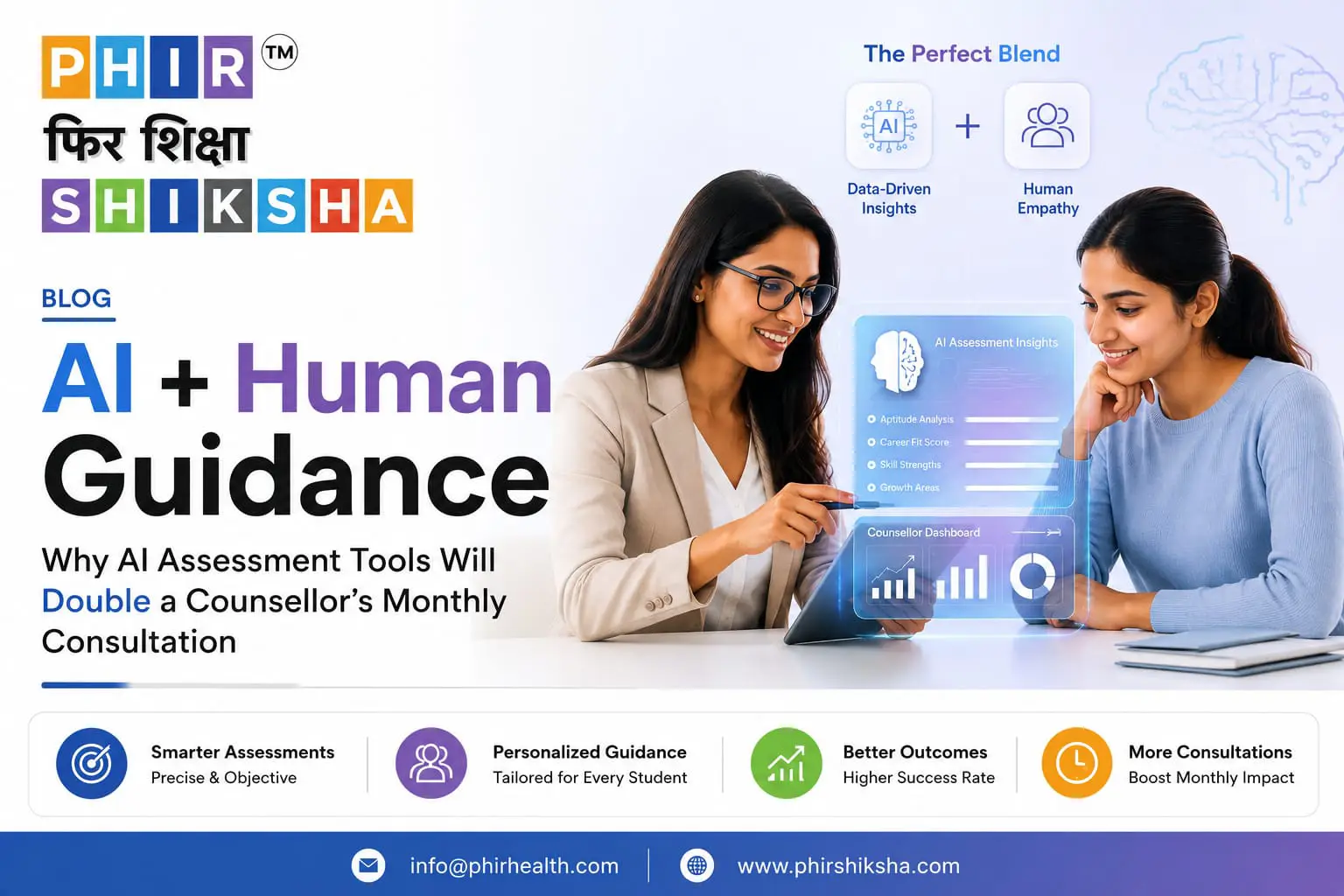
The short answer is no. Education was never just about processing information—it has always been about understanding people. The most promising road ahead isn’t replacing teachers with tech; it’s pairing smart tools with real human insight.
What Algorithms Do Exceptionally Well?
Algorithms provide answers, but mentors provide perspective. Learn why the true future of education pairs intelligent technology with empathetic human guidance.
Every learner moves at their own rhythm. Some grasp concepts visually, others need hands-on problem sets, and many simply need an explanation rephrased three different ways before it clicks.
This is where AI shines:
- Patience without limits: It will re-explain a tricky physics derivation at 1:00 AM without frustration.
- Instant diagnostics: It spots gaps—like struggling with quadratic equations before moving to calculus—and generates custom practice on the spot.
- Broad exploration: It opens windows into emerging fields, mapping out what a bioinformatician or a UI designer actually does daily.
Yet, raw data and instant answers only solve part of the equation.
Where Software Falls Short: The Human Context
Choosing a stream after 10th grade, picking an undergraduate degree, or pivoting toward a career isn’t an optimization problem. It involves financial realities, family dynamics, self-doubt, hidden passions, and emotional resilience.
An algorithm sees an input: “I want to work in Artificial Intelligence.” It immediately serves up a syllabus—linear algebra, Python, machine learning certifications.
A good mentor hears that same statement and pauses. They ask the questions a machine cannot anticipate:
- “What pulled you toward this? Is it the math, the problem-solving, or just the current hype?”
- “How do you handle long hours of debugging when things break?”
- “Given your interest in design, have you considered how AI interfaces are built rather than just backend engineering?”
Algorithms provide options. Mentors provide perspective.
The Power Couple: Data Meets Direction
Consider a student staring down a grueling competitive exam.
An AI dashboard can highlight that their organic chemistry retention has dropped by 18% over two weeks. That is a useful data point. What the dashboard cannot see is that the student has been sleeping four hours a night, feeling overwhelmed by mock test percentiles, and quietly losing confidence.
That is where a teacher, parent, or counselor steps in. They address the burnout, reset the study rhythm, and rebuild belief.
AI tracks the progress; mentors nurture the person. When these two forces work in tandem, students stop drowning in endless browser tabs and start moving with clear intent.
Raising Thinkers, Not Just Prompters
Preparing learners for an AI-shaped job market isn’t about training them to rely on machine-generated shortcuts. It’s about building the qualities no software possesses:
- Critical skepticism: Learning to interrogate answers, verify sources, and recognize bias.
- Contextual wisdom: Understanding why a solution works in the real world, not just in theory.
- Adaptive courage: Navigating career shifts with emotional stamina when industries evolve.
The Phir Shiksha Philosophy
At Phir Shiksha, the goal isn’t to pit technology against tradition. It is about creating a balanced ecosystem where modern tools handle the heavy lifting of personalization, while experienced educators offer the empathy, structure, and moral support that students actually need.
No algorithm can generate a universal roadmap for life, because no two students carry the same story.
Tech can illuminate what is possible. Only thoughtful guidance can help a student discover what is right.
Phir Shiksha — Learn with technology. Grow with guidance. Build your future.